Commercial Property Asbestos Regulations for Estate Managers: UK Requirements
Commercial Property Asbestos Regulations for Estate Managers: UK Requirements
Blog Article
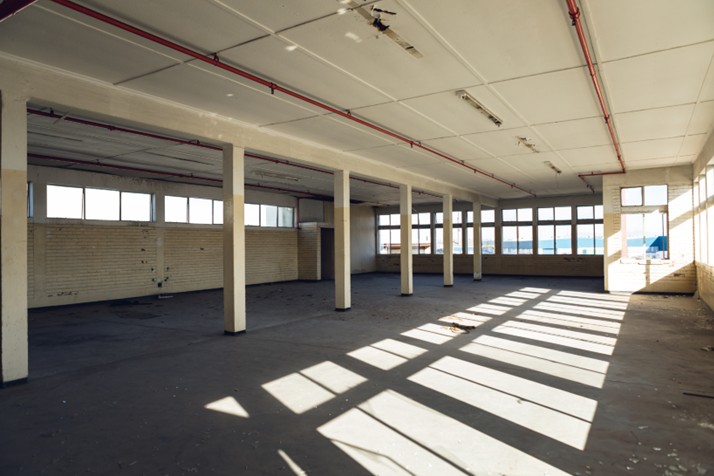
Commercial Property Asbestos Regulations: UK Guide
Under current commercial property asbestos regulations, landlords, commercial property developers, and facilities managers bear strict legal obligations to manage asbestos-containing materials. The Control of Asbestos Regulations 2012 sets out precise statutory procedures designed to protect occupants and visiting contractors from harmful airborne fibres. Any UK non-domestic building constructed or refurbished before 2000 may include legacy asbestos products. Maintaining an exact record through scheduled inspections protects occupant safety whilst guaranteeing full compliance with British occupational health and workplace safety standards across all operations.
Does your organisation hold the relevant technical reports to fulfil standard commercial building inspections? Detecting the presence of legacy fibres needs certified technical procedures, structured risk evaluations, and periodic site reviews. Failing to establish appropriate safeguards puts maintenance personnel at significant personal risk. Are you confident that your commercial premises currently meet every legal duty imposed by present-day British health enforcement agencies?
Key Takeaways
- Regulation 4 of the Control of Asbestos Regulations 2012 requires that commercial dutyholders identify, record, and actively manage all asbestos materials present within non-domestic premises.
- Premises built or refurbished before 2000 need an suitable survey to locate asbestos before routine maintenance or intrusive refurbishment commences.
- Commercial asbestos reports must document material condition ratings and priority scores to help property managers limit airborne fibre exposure across day-to-day operational activities.
- Failing to adhere to statutory asbestos management duties can trigger swift prohibition notices, considerable financial penalties, and criminal prosecution by the Health and Safety Executive.
- Commissioning surveyors accredited by UKAS to ISO/IEC 17020, with analysis by ISO/IEC 17025 laboratories, yields defensible data for commercial property portfolios.
Statutory Duties and Survey Categories Overview
UK commercial property asbestos regulations establish explicit legal obligations across building ownership, tenancy, and maintenance management. Dutyholders must arrange suitable surveys to protect contractors and employees from hazardous materials. The table below summarises the core survey categories and statutory documents needed by British law to ensure continuous operational and structural compliance across non-domestic sites.
Picking the appropriate inspection process depends upon the intended use of the building. Standard commercial tenancies necessitate continuous condition registers, whereas capital refurbishments necessitate rigorous intrusive investigations. Adhering to these established categories ensures property dutyholders remain fully compliant with statutory enforcement standards whilst preventing unforeseen delays during crucial maintenance or redevelopment work.
| Survey or Document Type | Statutory Purpose | Operational Scope |
|---|---|---|
| Management Survey | Supports normal occupation and routine maintenance | Accessible areas, sampling, and reasoned presumption |
| Refurbishment / Demolition Survey | Identifies all hidden materials prior to construction | Destructive inspection of fabric, voids, and risers |
| Asbestos Register | Maintains live inventory of known and presumed materials | Detailed risk scores, material conditions, and locations |
| Asbestos Management Plan | Outlines operational controls, reviews, and procedures | Written strategy for inspections and contractor access |
| Four-Stage Clearance Certificate | Validates safe reoccupation after licensed removal | Enclosure visual inspection, cleaning checks, and air testing |
Regulation 4 and the Statutory Duty to Manage
Dutyholder Roles Under UK Law
Under Regulation 4 of CAR 2012, the dutyholder is the person or commercial asbestos compliance report organisation responsible for maintaining and repairing commercial property. This role typically applies to freeholders, commercial landlords, or tenants holding full repairing leases. Contracts establish specific legal liability, ensuring that every non-domestic building has an named party accountable for workplace safety.
Lease terms determine how responsibilities split between parties. For multi-tenanted premises, landlords usually maintain duty over common areas such as lift lobbies, stairwells, boiler rooms, and main service ducts. Individual tenants frequently carry responsibility for internal spaces defined by particular lease agreements. Both parties must communicate effectively to remove management gaps.
Asbestos Management Plans and Registers
A written asbestos management plan sets the exact policies required to manage confirmed asbestos-containing materials safely. Dutyholders must create a live asbestos register that documents material locations, product types, physical conditions, and surface treatments. This documentation must remain accessible on-site to ensure maintenance operatives examine hazards before commencing works.
Compiling the register represents only the initial step. Regulation 4 requires dutyholders to review and monitor the management plan at regular intervals. In practice, we see most commercial sites set this at least annually. Any change in material condition, building alteration, or completed removal work demands an prompt update. An unreviewed plan quickly loses its value as a compliance record.
Survey Types Defined by HSG264
Standard Management Surveys for Daily Operations
A management survey pinpoints asbestos-containing materials that could suffer unintentional disturbance during routine building occupation and normal maintenance. Surveyors inspect accessible rooms, risers, and plant areas with only minor intrusion into the building fabric. Materials that cannot be sampled safely receive a reasoned presumption of asbestos content to safeguard occupants.
These surveys form the basis for commercial property asbestos surveys across trading premises, retail units, and logistics hubs. By sampling representative materials, qualified surveyors note the condition of ceiling tiles, pipe insulation, floor tiles, and structural boards. The findings help dutyholders to manage unbroken materials in place safely.
Refurbishment and Demolition Surveys Prior to Works
Refurbishment and demolition surveys are fully intrusive investigations legally required before contractors carry out structural alterations or demolition works. Surveyors penetrate walls, break through solid floors, and inspect concealed voids to identify concealed asbestos. This directed process ensures work teams can remove toxic materials safely before redevelopment.
Dutyholders must undertake these surveys before construction begins to observe Regulation 5 of CAR 2012 and the Construction (Design and Management) Regulations 2015. HSG264 expects the building or zone to be vacated and isolated during intrusive sampling. Finding unregistered asbestos during current construction prompts project shutdowns, costly emergency remediation, and severe health exposures.
Did You Know?
Although the UK prohibited blue and brown asbestos in 1985 and prohibited chrysotile completely in 1999, asbestos-related diseases still cause approximately 5,000 deaths across Great Britain every year due to historical exposures in pre-2000 structures.
Requirements for Commercial Asbestos Reports
Essential Components of a Compliant Report
Commercial asbestos reports must supply clear, usable documentation rather than nebulous, blanket caveats. A compliant report contains an executive summary, concise survey methodologies, notated building plans, and bulk sample analysis results. It clearly shows positive asbestos locations, presumed items, and inaccessible areas where further investigation remains necessary.
HSG264 guidance explicitly discourages over-reliance on general caveats that blur liability. Estate managers must get photographic evidence, precise dimensional estimates, and specific room notations for every item found. High-quality reporting gives maintenance contractors clear guidance before they drill into walls, repair mechanical plant, or change internal partitioning.
Material and Priority Risk Scores
HSG264 risk scoring integrates material assessment and priority assessment scores to determine precise management priorities. Material assessment examines product type, damage extent, surface treatment, and asbestos fibre type. Priority assessment measures occupant activities, maintenance likelihood, and room population to inform whether dutyholders should repair, encapsulate, or remove materials.
Integrating these scores creates a transparent numeric index that shapes budget allocation. Friable items in well-used corridors, such as unsealed asbestos insulating board fire breaks, receive higher ratings requiring swift intervention. Intact asbestos cement sheets found in rarely visited roof spaces return lower priority scores, supporting safe ongoing management through regular inspections.
Commercial Property Asbestos Surveys in Practice
Desktop Research and Site Scoping Procedures
Rigorous pre-survey planning starts with a full desktop study of original building schematics, historical renovation logs, and operating manuals. Surveyors collaborate with site managers to establish survey boundaries, check access constraints, and assess physical risks. This diligent scoping ensures the inspection team covers every applicable building zone systematically.
Commercial sites often present live electrical services, restricted ceiling voids, and high-level working platforms. Setting up robust permits-to-work, safety method statements, and isolation protocols averts site disruptions. Surveyors chart room-by-room routes, logging structural data digitally to create fully traceable records for dutyholders and estate managers.
Bulk Sampling Protocols and Laboratory Analysis
Surveyors collect representative bulk samples of suspect materials using stringent dust-suppression and containment techniques to avoid airborne contamination. Each sample is sealed in double polythene bags and issued a unique identification code. Certified laboratories then analyse the material structure to confirm actual asbestos fibre types present.
Analysis must take place in testing laboratories accredited by the United Kingdom Accreditation Service to ISO/IEC 17025 standards. Analysts apply polarised light microscopy alongside dispersion staining techniques in line with HSG248. Checked results then feed directly into the final survey report.
Legal Consequences of Non-Compliance
Health and Safety Executive Enforcement Powers
The Health and Safety Executive holds statutory powers under the Health and Safety at Work etc. Act 1974 to inspect commercial premises at any reasonable time. Inspectors can issue legally binding improvement notices that mandate remedial actions within specified deadlines. Where imminent risks exist, inspectors serve prohibition notices that freeze operations immediately.
A prohibition notice blocks access to commercial facilities, halting business trade, warehouse logistics, or construction schedules instantly. HSE publishes served notices on its public enforcement database. The subsequent disruption tarnishes commercial reputations and can place tenants in breach of lease covenants.
Financial Fines and Custodial Sentences
Prosecutions under commercial property asbestos regulations carry heavy statutory penalties for businesses, corporate directors, and property managers. Courts can impose unlimited fines on organisations for significant health breaches, alongside individual penalties for directors. Reckless exposure of building workers can lead to custodial sentences of up to two years.
The Sentencing Council guidelines set financial penalties based on organisational turnover and culpability levels. Major commercial property groups can encounter multi-million-pound liabilities when found guilty of systemic negligence. Beyond direct fines, dutyholders must pay HSE Fee for Intervention cost recovery charges and face civil claims from exposed workers.
Professional Competence and Survey Quality Standards
ISO 17020 Accreditation and Surveyor Qualifications
Dutyholders must validate surveyor qualifications and organisational competence before commissioning inspection work across commercial premises. Surveyors typically hold British Occupational Hygiene Society P402 qualifications backed by substantial field experience. The Health and Safety Executive strongly advises using surveying bodies accredited by UKAS to ISO/IEC 17020 standards to guarantee technical integrity.
UKAS accreditation demonstrates that an inspection organisation functions under the requirements of publication RG 8. This framework verifies that surveyors preserve technical independence, calibrate inspection equipment, and adhere to robust method statements. Hiring accredited professionals ensures inspection data survives legal scrutiny and meets institutional property investment audits.
Quality Assurance Systems and Field Audits
Robust quality assurance defends clients from partial surveys and inaccurate register records. Accredited organisations re-inspect a sample of completed survey sites to verify on-site accuracy. Standard operating procedures dictate that a secondary qualified surveyor peer-reviews every draft report before issuing formal documentation to commercial clients.
Auditing protocols ensure that material condition scores, sample boundaries, and photographic evidence fit actual physical site conditions. When laboratory analysts confirm positive identification, peer reviewers confirm that recommendations align with current HSE Approved Codes of Practice. This internal verification prevents administrative oversights, providing dutyholders with dependable risk management files.
Removal Protocols and Clearance Procedures
Plans of Work and Licensed Removals
High-risk asbestos-containing materials require removal by a licensed asbestos contractor operating under a documented Plan of Work. Materials including sprayed limpet insulation, pipe lagging, and most asbestos insulating board necessitate full negative-pressure enclosures, extraction units, and decontamination facilities. The contractor must submit statutory notification to the HSE at least fourteen days before work starts.
A detailed Plan of Work specifies standard control measures, negative-pressure airflow volumes, and respiratory protective equipment specifications. Negative-pressure units deliver at least eight air changes per hour within enclosures, cleaning air through high-efficiency particulate air filters. This dynamic air containment safeguards adjacent commercial units and passing personnel from fibre escape.
Four-Stage Clearance and Reoccupation Testing
Premises cannot return to normal occupation until an independent analyst completes a formal four-stage clearance in line with HSG248 guidance. The analyst conducts a visual inspection, judges cleaning thoroughness, completes air clearance monitoring, and issues a Certificate of Reoccupation. The clearance air test must record airborne fibres below 0.01 fibres per millilitre.
The clearance inspection verifies that contractors have removed all visible debris and dust residues before dismantling enclosures. Analysts must hold UKAS accreditation to ISO/IEC 17025 and remain independent of the removal contractor. Dutyholders should file every clearance certificate alongside the asbestos register.
Final Thoughts
Sustaining full compliance with commercial property asbestos regulations shields both building occupants and commercial real estate investments. Facilities directors, commercial landlords, and developers must regard statutory compliance as an active, continuous management cycle rather than a isolated administrative milestone. Compiling an precise asbestos register, reviewing management plans regularly, and commissioning intrusive investigations before structural works shields building maintenance teams from dangerous legacy fibres.
Enforcement attention on the duty to manage shows no sign of easing. Building owners who invest in systematic inspection protocols and maintain comprehensive records position their property holdings for smooth lease transitions and capital upgrades. Anticipatory hazard management remains the cornerstone of long-term operational resilience and workplace welfare across the built environment.
Frequently Asked Questions
Q: Who holds legal responsibility for asbestos in a leased commercial building?
A: Responsibility depends upon the lease agreement and building repair obligations under Regulation 4 of CAR 2012. If a tenant holds a full repairing lease, they typically act as the statutory dutyholder for their demise. However, the commercial landlord or managing agent generally holds legal responsibility for shared communal spaces, external structural fabric, and central mechanical risers. Both parties must examine lease contracts closely and share asbestos records to avoid harmful regulatory oversights.
Q: Are asbestos surveys legally required for modern commercial buildings constructed after 2000?
A: HSE guidance explains that buildings constructed after 2000 are unlikely to include asbestos, because the UK ban on chrysotile took effect in November 1999. The duty to manage still applies to all non-domestic premises. For newer buildings, recorded evidence of the construction date usually fulfils it. Dutyholders should hold building control completion certificates or architects' plans. Where a newer building incorporated salvaged materials or older plant, surveyors may propose a targeted inspection to establish no asbestos was introduced.
Q: How frequently must an asbestos register be updated in a commercial facility?
A: Regulation 4 requires dutyholders to review the asbestos register and management plan at regular intervals. Most commercial sites do so at least every twelve months. This inspection checks that previously identified materials remain in good condition without physical deterioration, unintentional impacts, or water leaks. In addition, dutyholders must update the register immediately whenever maintenance contractors modify, encapsulate, or remove asbestos-containing materials, ensuring that site documentation accurately captures existing physical conditions across the premises.
Q: What is the primary difference between a management survey and a refurbishment survey?
A: A management survey is a largely non-intrusive inspection devised to manage materials during normal occupation and ordinary maintenance tasks. It covers reasonably accessible areas, with only minimal intrusion. Conversely, a refurbishment or demolition survey is an intrusive, directed inspection legally required before any structural construction, fit-out, or demolition work occurs. It involves destructive opening of structural fabric, wall linings, and service risers to locate unseen materials that could be disturbed by construction workers.
Q: Can commercial property owners perform their own asbestos surveys and sampling?
A: Although the regulations do not strictly ban internal staff from conducting surveys, UK legislation requires anyone performing asbestos investigations to possess demonstrable technical competence. HSG264 requires thorough technical knowledge of building materials, sampling techniques, and risk assessment methodologies, normally demonstrated through BOHS P402 qualifications and, at organisational level, ISO/IEC 17020 accreditation. Unqualified personnel risk disturbing dangerous fibres, misidentifying toxic materials, and facing criminal liability for faulty asbestos registers, making independent professional surveys the standard industry practice.
Report this page